
This guide covers what changes at U13, a timed session plan, 10 drills with full set-ups, and how to handle the knee and heel pain that often appears during growth spurts.
What changes at U13
Bodies change fast, and at different speeds
U.S. Soccer's player development framework for U13 describes rapid growth in height and weight, big differences between players in strength and size, and a period of "adolescent awkwardness". The same framework notes that injury rates tend to rise at this stage, naming Osgood-Schlatter and Sever's disease among the common problems. On one team you might have a player who has finished growing next to one who hasn't started. A player who was quick and coordinated last season can look clumsy for a few months. Judge players on decisions and technique, not size, and don't write off late developers.
The match format (check where you are)
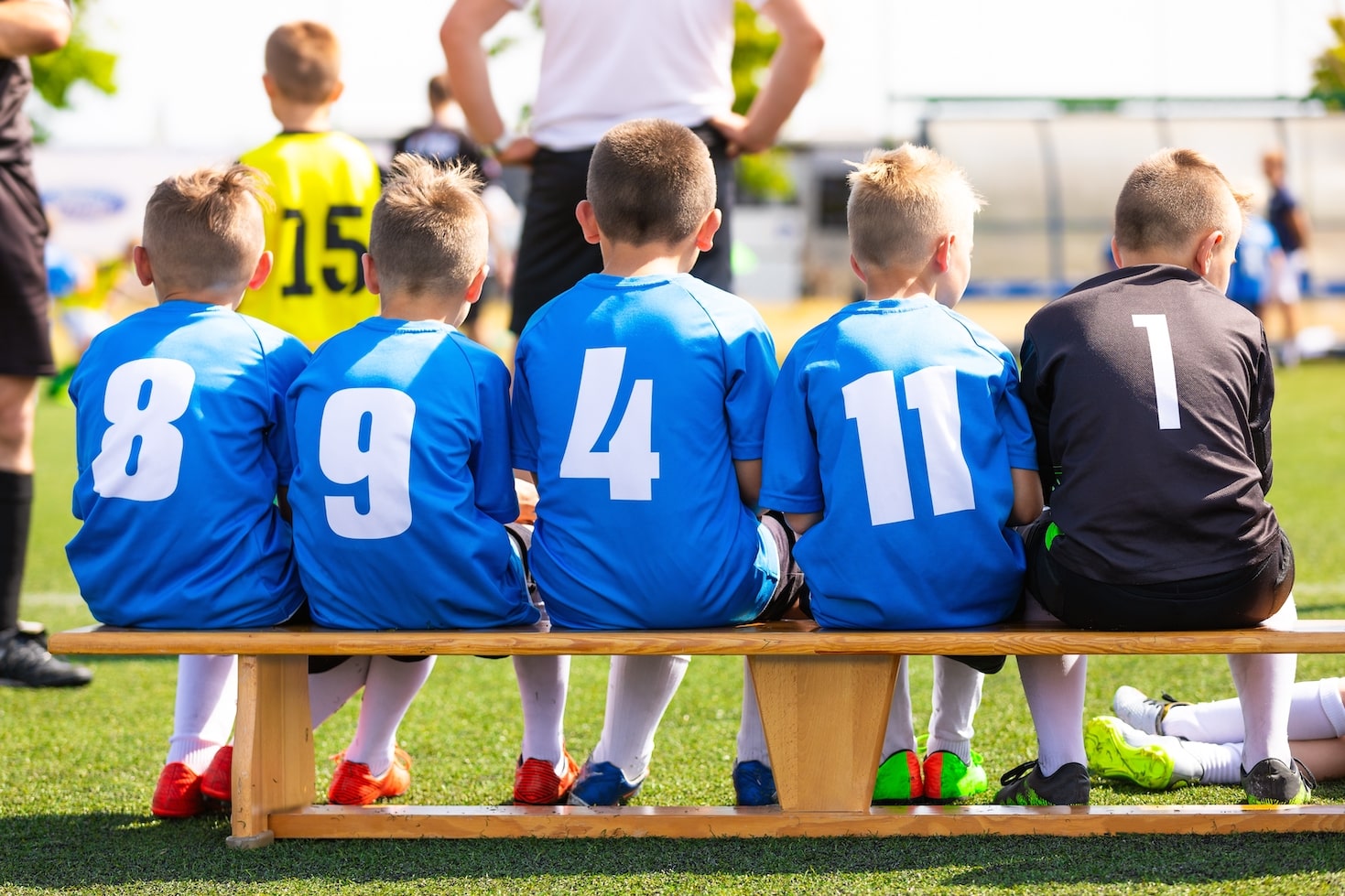
- United States: U13 is the first 11v11 year. U.S. Soccer's standards are a field 100-130 yards long and 50-100 yards wide, 8 x 24 ft goals, and a size 5 ball (U.S. Soccer's framework allows a size 4 or lower-pressure ball at U13, with size 5 recommended). From 2026-27, US Youth Soccer, US Club Soccer and AYSO group players August 1 to July 31, so U13 is players born August 1, 2013 to July 31, 2014.
- England: under England Football's Future Fit changes, U13s now stay on 9v9 for the 2026-27 season, and 11v11 starts at U14. The FA's format guide lists a size 4 ball, 16 x 7 ft goals and 60 minutes of match play for U12-U13. If your team expected to step up to 11v11 this season, that's no longer the case. Some leagues let teams play up an age group, so check with yours.
Whichever format you play, U13 is a good age to coach roles: what a full-back does when the ball is on the far side, or when a midfielder should drop in rather than run forward.
Heading
Both countries limit heading in training at this age. U.S. Soccer recommends a maximum of 30 minutes of heading practice a week for U12 and U13, with no more than 15-20 headers per player per week. England Football advises a maximum of one heading session a week at U13, up to five headers, with light balls, short distances and no opposition. Keep heading as a small, planned part of the week, not an add-on to crossing drills.
They can handle real tactical ideas
Thirteen-year-olds can take a principle from one situation and apply it in another, plan ahead, and form their own opinions. That makes this the right age to teach tactical ideas such as pressing triggers, switching play and defending as a unit, and to ask "what did you see?" instead of telling them the answer. U.S. Soccer's framework also suggests giving players more ownership, including leading their own warm-up.
A 75-90 minute U13 session structure
| Time (90 min) | Block | Example |
|---|---|---|
| 0-12 | Player-led warm-up | Mobility, skips, changes of direction, then ball work in pairs |
| 12-25 | Technical / rondo | Drill 1 or 2 |
| 25-27 | Water | Set up the next area |
| 27-45 | Possession practice | Drill 4 or 5 |
| 45-62 | Theme practice: finishing or defending | Drills 6-9 |
| 62-65 | Water | Quick explanation of the game's conditions |
| 65-85 | Small-sided or conditioned game | Drill 10 |
| 85-90 | Cool down and review | Two questions: what worked, what will we try on matchday? |
For a 75-minute session, cut the theme practice to 12 minutes and the game to 15. Keep the game: it's where players use what they've practiced and where a lot of the enjoyment comes from. For fully written-out sessions, see our U12 soccer practice plans.
10 soccer drills for 13 year olds
1. Technical: 5v2 rondo
- Area: 12 x 12 yards (11 x 11 m).
- Players: 7 (5 outside, 2 defenders inside). Run two rondos for 14 players.
- Equipment: 4 cones, balls, bibs.
- How it runs: The outside five keep the ball from the two defenders. Ten passes scores a point. When a defender wins it, the player who made the mistake swaps in.
- Coaching points: open your body so you can see the next pass before the ball arrives; pass to the foot away from the defender; when a pass goes through the two defenders ("splitting"), that counts double.
- Progression: two-touch maximum, then one-touch for the outside player who receives a split pass.
2. Technical: Diamond receiving on the half-turn
- Area: diamond of 4 cones, 15 yards (14 m) apart.
- Players: 6-8, starting at the cones with extra players at the first cone.
- Equipment: 4 cones, 2 balls.
- How it runs: Pass to the next cone and follow your pass. The receiver checks away, then shows for the ball, receives across the body with the back foot, and passes on. Run both directions so players use both feet. These passing drills are a good next step.
- Coaching points: scan over the shoulder before receiving; receive on the back foot to face forward; pass firm enough that the next player doesn't have to come towards it.
- Progression: put a passive defender behind the receiving cone; the receiver has to decide whether to turn or set it back.
3. Technical: 1v1 to two gates
- Area: 15 x 12 yards (14 x 11 m), with two 2-yard gates on the attacker's target line.
- Players: pairs rotating, 4-6 per area.
- Equipment: cones, balls.
- How it runs: The defender passes to the attacker and steps in. The attacker scores by dribbling through either gate. Swap roles each turn. Use this to work on ball control and footwork at full speed.
- Coaching points: attack the defender's front foot; fake to one gate and go to the other; accelerate for three or four steps after beating the defender.
- Progression: if the defender wins the ball, they can counter to a small goal behind the attacker's start line.
4. Possession: 4v4 + 3 positional game
- Area: 30 x 25 yards (27 x 23 m).
- Players: 4v4 inside plus 3 neutrals: one at each end line and one inside who always plays for the team in possession.
- Equipment: cones, 3 sets of bibs, balls around the outside.
- How it runs: The team in possession has a 7v4 advantage. A point is scored by playing from one end neutral to the other. Play 3-minute rounds and rotate the neutrals.
- Coaching points: make the field big when you have the ball and small when you lose it; look for the player between the lines (the inside neutral); after losing the ball, press for five seconds, then recover.
- Progression: end neutrals become one-touch, and the inside neutral can't pass back to the player who passed to them.
5. Possession: End-zone game
- Area: 35 x 25 yards (32 x 23 m) with a 5-yard (4.5 m) end zone at each end.
- Players: 5v5 or 6v6.
- Equipment: cones, bibs, balls.
- How it runs: Score by receiving a pass while running into the opponent's end zone, as long as you arrive after the ball is played (no waiting in the zone). Restart from your own zone after a point.
- Coaching points: time your run off the shoulder of the last defender; the passer should play into space, not to feet; if the forward pass isn't on, switch play to the other side.
- Progression: a team must make one pass in each half of the field before it can score, to encourage switching play.
For more practices on movement off the ball and creating chances, browse the attacking drills in the Cupello library.
Improve Your GameJust 1.99 p/m
Exclusive drills and sessions, get involved today!
- 100’s of Drills
- Coach to Camera Videos
- Sessions from Pro’s
- Industry Leading Advice
6. Finishing: Set and finish
- Area: the penalty area plus 10 yards (9 m) beyond it, with a full-size goal (or the goal for your format) and a goalkeeper.
- Players: 8-10: a line of midfielders 30 yards out, a line of strikers at the top of the box, plus a goalkeeper.
- Equipment: goal, balls, cones.
- How it runs: The midfielder passes into the striker, who checks towards the ball and sets it back. The midfielder runs onto the set and shoots from 16-20 yards. The striker follows in for rebounds. Players rotate lines. Browse more shooting drills to vary the pattern.
- Coaching points: the set should be soft and angled into the shooter's path; the shooter strikes across the keeper towards the far post; head over the ball to keep the shot low.
- Progression: a defender starts five yards behind the striker and tries to block the shot, so the shooter has to strike first time.
7. Finishing: 2v1 into 3v2 waves
- Area: 40 x 35 yards (37 x 32 m) from the goal line, with a goal and keeper at one end and two small counter goals at the other.
- Players: 10-12 split into attackers and defenders, plus a goalkeeper.
- How it runs: Two attackers play against one defender towards goal. As soon as the attack ends, a third attacker and a second defender join with a new ball for a 3v2. If the defenders win the ball, they score in either counter goal. This practice is a good lead-in to our attacking soccer drills, and you can find more finishing practices for 13-15 year olds in the Cupello library.
- Coaching points: the ball carrier drives at the defender to commit them before passing; the support player stays wide enough to stretch the defender; shoot early when the keeper is off balance.
- Progression: a 7-second limit to finish each wave.
8. Defending: 1v1 defending channel
- Area: 20 x 10 yards (18 x 9 m) with a small goal at one end.
- Players: pairs, 4-6 per channel.
- Equipment: cones, small goal, balls.
- How it runs: The defender passes to the attacker at the far end and closes them down. The attacker tries to score in the small goal. If the defender wins the ball, they score by dribbling over the attacker's start line.
- Coaching points: close down quickly, then slow down for the last few yards; stay low and side-on so you can turn; show the attacker towards the sideline and only tackle when the ball is off their foot.
- Progression: the attacker starts with a gap of 5 yards, so the defender has to move quickly to get close enough.
9. Defending: 2v2 pressure and cover
- Area: 25 x 20 yards (23 x 18 m) with two small goals at each end.
- Players: 2v2, with teams waiting to rotate in every 90 seconds.
- Equipment: 4 small goals, bibs, balls.
- How it runs: A normal 2v2 game. The coach stops play briefly to check the defensive shape: one player pressing the ball and one covering.
- Coaching points: the nearest defender presses and calls "I've got ball"; the covering defender sits 3-5 yards behind at an angle; when the ball is passed, the two players swap jobs.
- Progression: 3v3 with a third defender providing balance on the far side. For more practices built around these ideas, see our defending soccer drills.
10. Small-sided game: Transition game
- Area: 60 x 40 yards (55 x 37 m), or a half field, with two goals and goalkeepers.
- Players: 7v7 or 8v8 including goalkeepers.
- Equipment: 2 goals, bibs, balls behind each goal.
- How it runs: A normal game with one condition: a goal scored within six seconds of winning the ball counts double. Play offside exactly as your match format does, so players practice the same rules they will face on matchday. A couple of rounds of fun games make a good change from this on lighter weeks.
- Coaching points: when you win the ball, look forward first; when you lose it, the nearest player presses straight away and the rest get compact; the goalkeeper should start attacks quickly with throws or short passes.
- Progression: each team plays in the formation it uses on matchday, so players learn their roles in a game that looks like a match.
Want more? Our technical soccer drills cover ball mastery for players who need extra touches, and the Cupello library has more soccer drills filtered by age.
Handling growth-related pain
Two problems come up again and again with this age group. Neither is a reason to panic, but both are a reason to involve a professional.
Osgood-Schlatter
Osgood-Schlatter causes pain, swelling and sometimes a tender bony lump just below the kneecap, at the top of the shin. It's linked to growth spurts and to sports with lots of running, jumping, kneeling and changes of direction, which includes soccer. NHS guidance describes it as common in active young people and says it usually settles once they stop growing, although it can flare up again during later growth spurts.
Sever's disease
Despite the name, Sever's isn't a disease. It's pain at the back or bottom of the heel, where the Achilles tendon pulls on a growth area of the heel bone. NHS and NICE guidance say it usually affects children aged roughly 8 to 15, gets worse with running and jumping, and can make a child limp or walk on their toes. It usually settles with time.
What coaches should do
- Don't diagnose. If a player has ongoing knee or heel pain, a limp, or pain that's worse the morning after training, tell their parents and suggest they see a doctor or physical therapist.
- Follow the professional's advice. If a player has been told to cut down on certain activities, plan for it: give them a role in the session, such as serving balls, playing as a neutral in possession games, or helping run a station, so they stay part of the group.
- Don't reward playing through pain. Make it normal for players to tell you when something hurts. U.S. Soccer's framework suggests helping players understand the difference between being hurt and being injured.
- Watch the load. Big jumps in training volume, such as preseason camps or several teams at once, are when problems tend to appear. Ask players what else they're playing that week.
Drills for other ages
Coaching a slightly younger group? See our U12 soccer drills and U12 soccer practice plans. For older players, try our U14 soccer drills and U15 soccer drills, or browse every age group in our soccer drills hub.
Cupello
Rethinking soccer coaching via our industry leading tools. Built to offer effective coaching development solutions for players and coaches of all levels.