
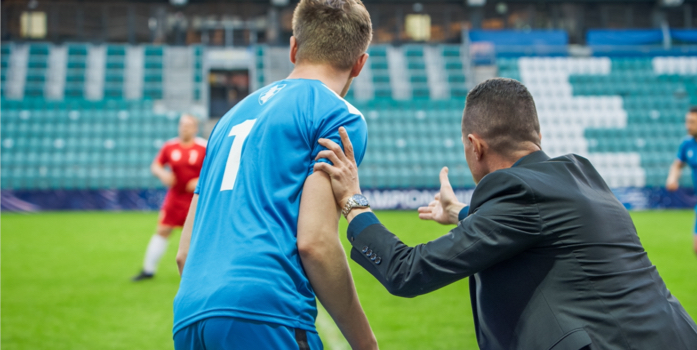
Teams that learn to recognise and exploit transitions effectively can punish unbalanced opponents and turn defence into attack with devastating speed.
What Are Attacking Transitions?
An attacking transition occurs the second your team wins the ball back, whether through a tackle, interception, goalkeeper save, or opponent’s mistake. For a few precious seconds, the opposition is often stretched, disorganised, or out of position. This creates the perfect chance to counter quickly, exploit space, and create goal-scoring opportunities.
The Two Key Choices
When possession is regained, players face an immediate decision:
-
Counter-Attack Quickly – Exploit space before the opposition reorganises. Look to play forward fast, use runners, and break lines.
-
Secure Possession – If no forward option is available, keep the ball, connect short passes, and allow teammates to support.
Coaches must train players to scan before possession, so they already know whether to play forward instantly or retain the ball.
Principles of Attacking Transition
-
First Pass Forward – The quickest way to exploit space is with a forward pass into attacking areas. Midfielders and defenders must look up as they win possession.
-
Supporting Runs – Teammates must immediately sprint forward into dangerous positions. Wide players stretch the pitch, while strikers look to run behind.
-
Speed of Play – The quicker the ball moves, the harder it is for the opposition to reset. One or two touches are often enough.
-
Exploiting Width – Transitions often leave space on the flanks. Wide passes open up counter-attacks and isolate defenders.
-
Decision-Making – Not every regained ball should trigger a fast break. Sometimes the safest option is to keep possession and rebuild.
Coaching Attacking Transitions
To embed transition play, coaches should use small-sided games with quick turnovers, live ball restarts, and rules that reward fast play. For example:
-
3-Second Counter Rule: After winning possession, a team must attack within three seconds.
-
Rebound Game: After a shot, the goalkeeper immediately releases the ball to spark a counter.
-
Overload Transition: Play 5v3 – if defenders win it, they counter into mini-goals.
These conditions force players to think fast, scan constantly, and anticipate the next phase.
Common Mistakes
-
Players Standing Still – The moment possession is regained, attackers must move, not admire the ball.
-
Poor First Touch – A heavy touch slows down the counter and allows defenders to recover.
-
Ignoring Width – Attacks become predictable if the team only drives centrally.
-
Over-Commitment – Not every transition needs an all-out counter. Risk management is key.
Why It Matters
The best teams in the world thrive in transition. Youth players must learn that games are often decided not in slow build-up but in the 5–10 seconds after the ball changes hands. Training this phase develops sharper reactions, smarter decision-making, and a ruthless attacking edge.
3-Session Training Plan: Attacking Transitions
Session 1: Awareness & Speed of Reaction
Objective: Train players to react instantly after winning possession and make quick forward decisions.
-
Time: 60 mins
-
Setup: 20x20 yard area, 12–14 players, bibs, 2 mini-goals.
Drills:
-
3v3+2 Neutrals (15 mins): On turnover, team has 5 seconds to score in mini-goals. Rewards immediate forward play.
-
Transition Rondo (20 mins): 4v2 rondo. If defenders win it, they counter into mini-goals within 3 seconds.
-
Conditioned Game (20 mins): 6v6. Team scoring within 5 passes after regaining possession gets 2 goals.
Coaching Points:
-
Scan before possession to know your options.
-
Positive first touch forward.
-
Quick support runs.
Session 2: Forward Play & Supporting Runs
Objective: Develop structured attacking transitions with coordinated movement and width.
-
Time: 70 mins
-
Setup: Half-pitch, 14–16 players, 2 goals with keepers.
Drills:
-
Win & Break (20 mins): 5v5 in central zone. On winning possession, play into 2 wide target players, then break to goal.
-
Counter Channels (25 mins): 7v6. When defenders win the ball, they have 8 seconds to counter using wide channels before finishing.
-
Wave Attack Game (20 mins): Team attacks 5v4, finishes, then defending team immediately counter-attacks other way.
Coaching Points:
-
Wide players stretch play instantly.
-
Strikers run beyond defenders.
-
First pass forward beats most defenders.
Session 3: Game Realism & Decision-Making
Objective: Train players to choose between fast counters or retaining possession.
-
Time: 75 mins
-
Setup: 2/3 pitch, 16–20 players, 2 goals with keepers.
Drills:
-
Counter or Keep (25 mins): 8v8 game. After regaining possession, players decide whether to counter (if numbers up) or keep the ball (if numbers down). Coach freezes play to discuss decisions.
-
11v11 Transition Game (30 mins): Normal game rules. Bonus goals if scored within 10 seconds of regaining possession.
-
Final Challenge (15 mins): Two teams compete to score most goals from transition moments only.
Coaching Points:
-
Decision-making: counter fast if space, keep it if not.
-
Avoid over-committing and leaving gaps.
-
Communication: trigger words like “go” or “keep”.
✅ Progression Summary:
-
Session 1 builds awareness and speed.
-
Session 2 adds movement, width, and patterns.
-
Session 3 replicates real-game decision-making.
Players finish the block with a strong understanding of when and how to attack in transition, plus the ability to balance risk and reward.
Coach’s Toolkit: Attacking Transitions
1. Key Coaching Phrases
Use short, repeatable trigger words so players respond quickly:
-
“First pass forward!” – encourage vertical play immediately after regaining possession.
-
“Stretch them!” – wide players sprint to create space.
-
“Support the runner!” – midfielders follow the attack to give options.
-
“Secure it!” – if fast counter isn’t possible, keep possession.
-
“Press again!” – after losing it in transition, apply instant pressure.
2. Player Challenges
Set individual and team challenges to drive learning:
-
Attackers: Can you score within 8 seconds of winning the ball?
-
Midfielders: How many times can you find a forward pass straight after regaining?
-
Defenders: Win it and play forward in 2 touches or less.
-
Whole Team: Stay connected – no player more than 15 yards from support in transition.
3. Observation Checklist (for Coaches)
While watching, focus on these:
-
Reaction Speed: Do players instantly switch from defence to attack?
-
First Pass Decision: Is it positive (forward if possible)?
-
Runs Without the Ball: Are wide players and strikers moving into dangerous spaces?
-
Balance: Are players aware of leaving cover behind the ball?
-
End Product: Do transitions lead to shots, chances, or effective possession?
4. Common Errors to Correct
-
Hesitation after winning the ball.
-
First pass sideways or backwards when forward was possible.
-
Strikers not running beyond defenders.
-
Team over-committing, leaving themselves open to counters.
5. Reflection Questions for Players
End session with a quick debrief:
-
When is the best moment to counter quickly?
-
What should your first thought be after regaining possession?
-
How can you help teammates if you’re not on the ball?
-
When should we slow down instead of rushing?
✅ With this toolkit, coaches can reinforce clarity, challenge players, and sharpen observation, turning transition play into a strength.


Improve Your GameJust 1.99 p/m
Exclusive drills and sessions, get involved today!
- 100’s of Drills
- Coach to Camera Videos
- Sessions from Pro’s
- Industry Leading Advice
Final Takeaway
Attacking transitions are about speed, awareness, and intent. Teach players to recognise the moment, make the right choice, and commit with confidence. A well-drilled team will turn turnovers into goals, shifting matches in their favour and developing a modern, dynamic style of play.


Cupello
UEFA B Coach, FA Level 3, FA Youth Modules 1, 2 and 3, Coerver Youth Diploma, SPAIN: Catalan Football Federation Smart Football, USA: United Soccer Coaches diploma. Sports journalist for the Sunday Mirror published author of several volumes of coaching books & international lecturer on soccer.